
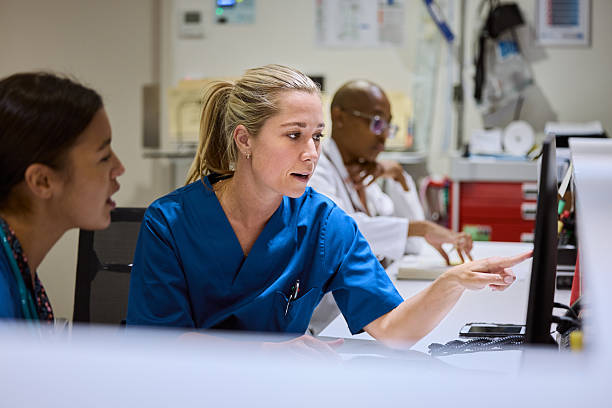
In 2026, registered nurses interested in advancing their careers now have more options than at any other point in history. Online RN‑to‑MSN programs allow you to pursue a Master of Science in Nursing while you continue working, caring for family or living far from traditional campuses. These distance programs combine digital coursework with local clinical experiences that can fit around your schedule.
Current enrollment data show that graduate nursing programs across the country are seeing growth, with master’s‑level nursing enrollments increasing by about 4.8% in the most recent year, adding approximately 6,300 more students compared with the prior year, marking the first graduate enrollment increase since 2021. Many nurses choose online pathways because they provide flexibility and access, particularly if you live in a rural area or a region where brick‑and‑mortar graduate nursing programs are scarce.
For workforce planning, this broadened access matters; it helps cultivate a pipeline of highly educated nurses prepared for advanced roles without requiring relocation or career interruption.
Accelerating career mobility while addressing shortages
Pursuing RN MSN online programs can transform your professional trajectory. Advanced nursing degrees prepare you for leadership roles in clinical practice, education, administration and public health. Perhaps tellingly, the U.S. Bureau of Labor Statistics projects growth in nursing employment faster than the average for all occupations, with many healthcare employers increasingly interested in nurses who hold graduate qualifications.
This trend reflects broader shifts in care delivery, where complex patient needs and oscillating healthcare models demand clinicians with advanced decision‑making skills and leadership capacity. Today, demand for nurse leaders, educators and advanced practice nurses remains high even as the nation grapples with a projected shortfall of registered nurses and other care providers. However, filling these roles demands graduate education that equips you with analytical skills, policy knowledge and a deeper understanding of healthcare systems.
Building competence and clinical readiness remotely
It’s understandable to wonder how hands‑on clinical skills translate into a distance learning environment. Today’s online RN‑to‑MSN curricula integrate immersive virtual simulations, telehealth practicums and partnerships with local healthcare facilities to deliver authentic clinical experiences. Simulation technologies allow you to practice complex skills and critical thinking in controlled, low‑risk settings before applying them in real patient care.
Overarchingly, emerging trends in nursing education indicate that virtual simulation and competency‑based digital learning are now widely integrated into graduate programs, mirroring how clinical care itself is advancing in the digital age. In many cases, programs require you to complete clinical placements in settings near where you live, leveraging local mentors and preceptors. These blended approaches support your development as a confident and competent advanced nurse and contribute to a workforce that can meet diverse patient needs across a range of healthcare settings.
Supporting lifelong learning and professional resilience
Advancing your education through an online RN‑to‑MSN program also sculpts you as a lifelong learner, where distance graduate education teaches you how to manage complex schedules, engage with digital learning tools and apply evidence‑based knowledge in real time. These skills are increasingly relevant in workplaces that emphasize continuous improvement, quality measurement and interdisciplinary collaboration.
Meanwhile, professional resilience is another byproduct of this model: completing graduate coursework while balancing work and personal life builds confidence, adaptability and self‑directed learning habits that strengthen your ability to thrive in high‑pressure healthcare environments. Typically, employers recognize these qualities and often seek nurses who can translate academic knowledge into practice, lead teams through change and improve care delivery processes. As you grow professionally, you contribute to a nursing workforce better equipped to respond to evolving challenges such as population health needs, chronic disease burdens and demographic shifts.
Strategic implications for health workforce planning
From a health workforce perspective, online RN‑to‑MSN programs play an increasingly strategic role, expanding the pipeline of graduate‑prepared nurses ready to assume advanced roles where demand is greatest, particularly in leadership, education and specialized care. As the RN workforce ages and a significant portion plans retirement over the next decade, having a robust cadre of nurses with graduate credentials becomes essential for sustaining quality care delivery.
Workforce shortages extend beyond bedside nursing to include faculty positions, nurse managers and clinical educators, which are critical for training the next generation of nurses and supporting workforce expansion. Here, online pathways help diversify the pool of advanced nurses by making graduate education accessible to those who might otherwise face geographic, financial or time constraints. When you complete an online RN‑to‑MSN program, you become part of a broader solution to workforce gaps, strengthening healthcare capacity across community health, acute care, education and policy arenas.
Final notes
Online RN‑to‑MSN programs are undoubtedly a convenience, but in 2026, they are also an integral part of the future of nursing education and workforce planning. These programs widen access to advanced study, support your career goals and connect you directly with the competencies required for leadership and specialized practice. Their incorporation of simulation, telehealth and flexible clinical arrangements prepares you for the realities of modern healthcare.
As nursing shortages continue to challenge providers and communities, expanding graduate education at a distance allows more nurses like you to step into influential roles that improve care, strengthen teams and lead organizations through change. Online RN‑to‑MSN pathways reflect a commitment to creating a nursing workforce that is resilient, highly skilled and ready to meet the complex health needs of populations across the United States.
Key stats
- Graduate nursing enrollment is rising: Master’s nursing programs grew 4.8%, adding ~6,300 students in the past year.
- Demand for advanced practice nurses is strong: Nurse practitioner roles are projected to grow 40% by 2032.
- RN workforce continues to expand: Total U.S. registered nurses increased 9% over the past five years.




