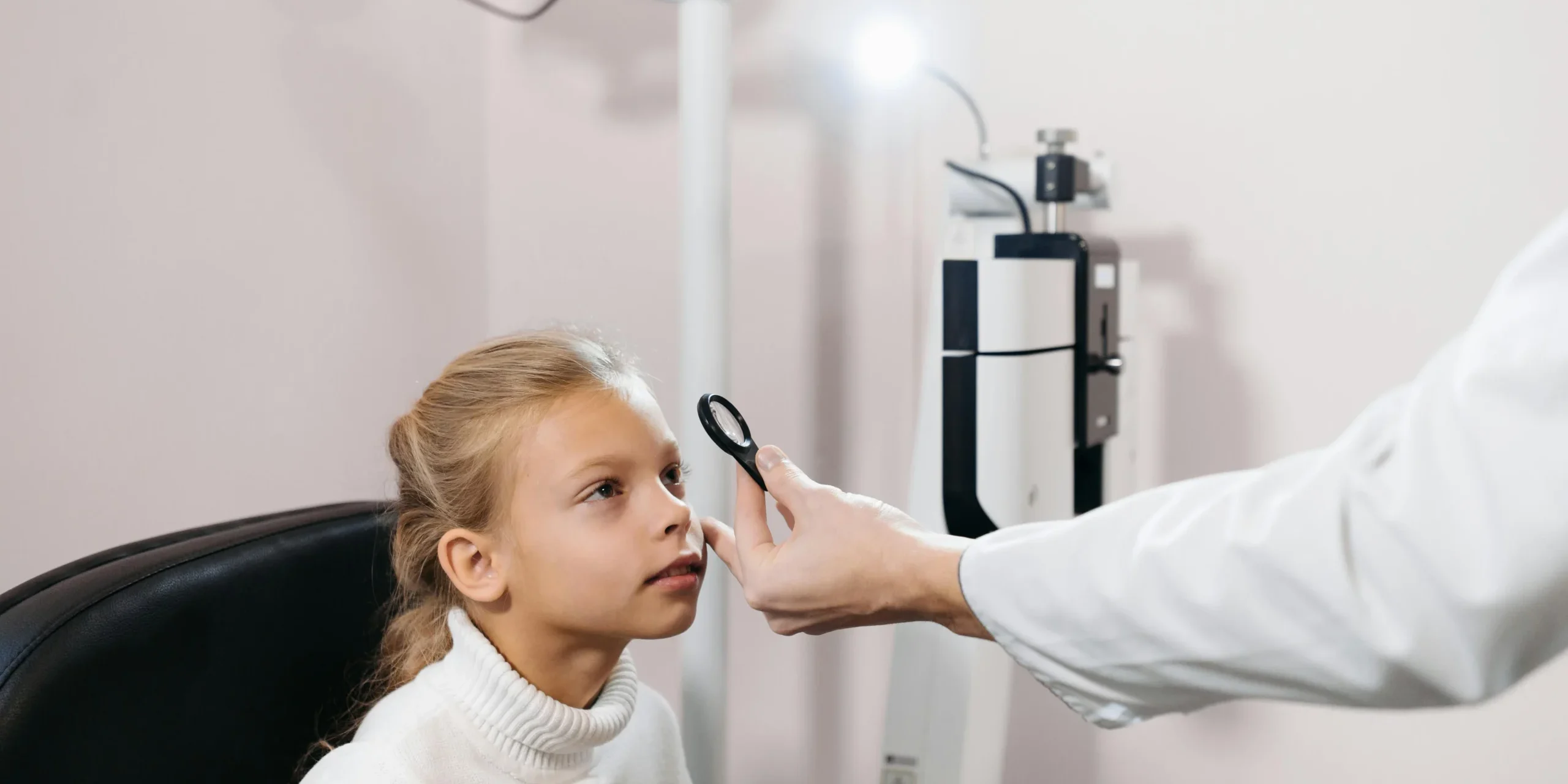
An eye exam measures how well you see and checks the health of your eyes. Many eye conditions develop slowly, and some show no early symptoms. You may seem fine, but changes will occur without warning, so regular exams help you stay informed.
Clear Vision and Correction
An eye exam measures your visual sharpness. A visual acuity test involves reading a chart to check how each eye sees at a distance. Your doctor may also evaluate how well your eyes work together, since coordinated eye movement affects focus and depth perception. Your prescription can change over time. An exam confirms whether your current lenses still fit your needs. An exam identifies the cause, and your doctor will update your correction accordingly.
Your doctor uses a device called a phoropter to test different lens options. This helps find the most accurate prescription for you. Whether you wear glasses, contact lenses, or no correction at all, an exam gives you a current and accurate picture of how your eyes perform. Clear vision supports daily tasks. You read, drive, and work with your eyes, so accurate correction matters. An exam gives you the information you need, and it helps you decide whether new glasses or contacts are appropriate.
Early Condition Detection
Early eye exams catch conditions before you notice any symptoms, giving you more time and options to manage them effectively.
Conditions That Develop Without Warning
Glaucoma often develops without pain, yet it may cause vision loss. During an exam, your doctor examines the retina and optic nerve to look for early signs of glaucoma or macular degeneration. Eye pressure is also measured. Elevated levels will indicate a higher risk for glaucoma. Early detection allows your doctor to monitor the condition and recommend steps that may slow its progression. Your family history matters too.
Symptoms That Deserve Prompt Attention
Some changes in your vision should not be ignored. A sudden increase in floaters, small shapes that drift across your field of vision, can signal a change that needs review. Red eyes may result from irritation, dryness, or infection. Your doctor will identify whether the cause will resolve on its own or needs treatment. Catching these changes early gives your care team more options, and it supports better outcomes for both your vision and your overall health.
Proactive Long-Term Eye Care
Regular exams support long-term eye health. An eye exam establishes a record of your vision. Your doctor can compare results over time. When changes appear gradually, a baseline helps track them, so small shifts do not go unnoticed. Consistent monitoring gives your doctor the data needed to guide care. Your age and overall health will influence how often you need an exam. Certain conditions become more common with age. Your doctor will recommend a schedule that fits your situation, and this helps make sure your eyes receive appropriate attention. Lifestyle factors also affect eye health.
Book Your Next Eye Exam
An eye exam supports both your vision and your eye health. It measures sharpness, detects conditions early, and it creates a record for future care. Schedule an appointment with an eye care provider, and ask how often you should return based on your age and health. Since regular exams keep you informed, you can make decisions with clear information.