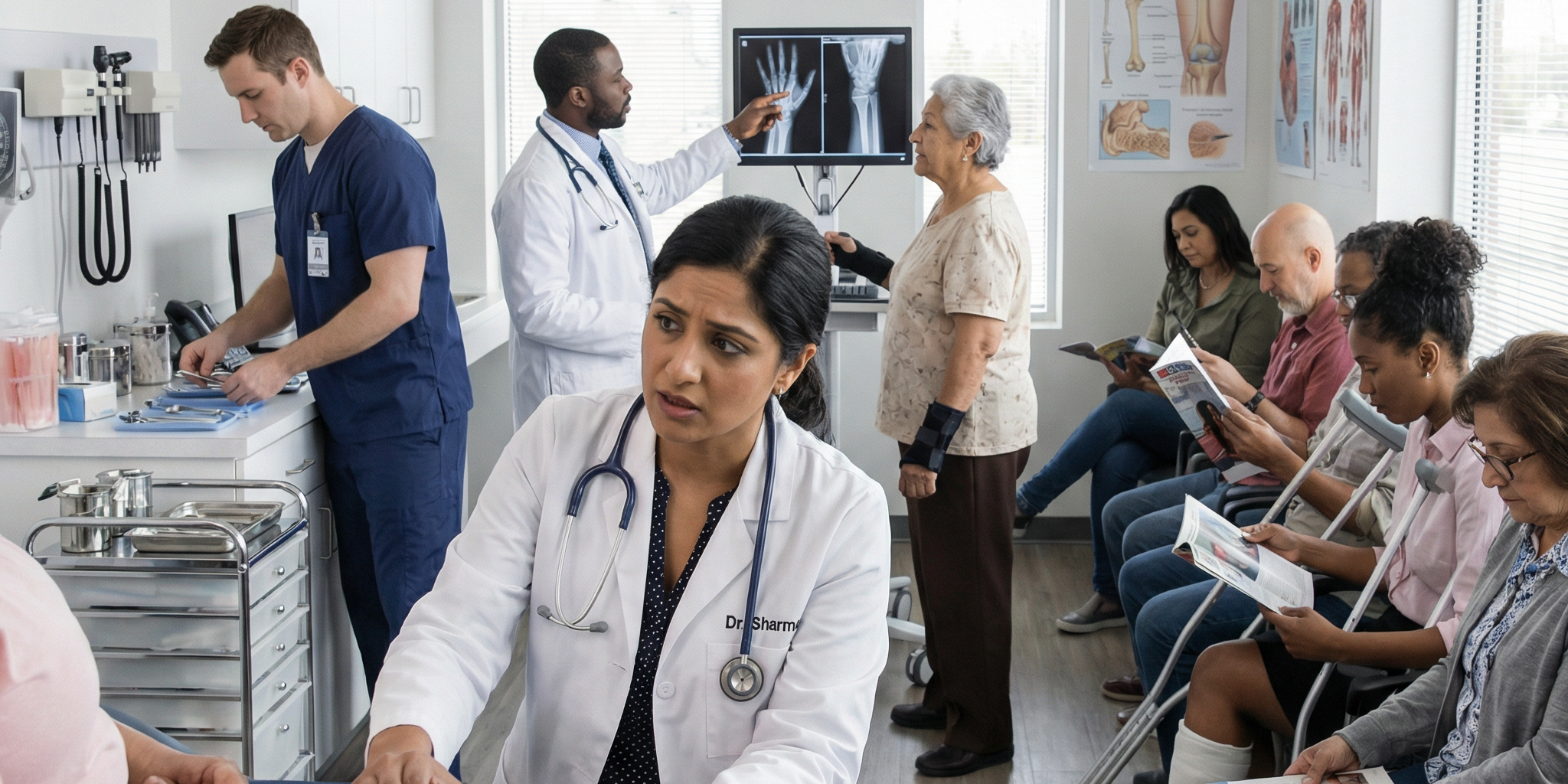
An orthopedic clinic treats problems with your bones, joints, muscles, and connective tissue, and providers offer both nonsurgical and surgical options. You might visit after an injury, and you might also come for chronic pain. Since your body relies on this system to move, the care here covers many needs. Here are some of the services you can find at an orthopedic clinic:
Physical Therapy Sessions
Physical therapy helps you rebuild strength and motion after injury or surgery. A therapist designs a plan for your specific condition, and you follow guided exercises during each session. Progress takes time, but many people work through several weeks of care. A specialist may combine several techniques at an orthopedic clinic:
- Stretches and range-of-motion exercises
- Therapy for stiff joints
- Balance and coordination drills
- Ice, heat, or electrical stimulation
As everyone heals differently, your program shifts as you improve. The therapist tracks your movement, and they adjust the difficulty over time. You learn exercises to continue at home.
Platelet-rich Plasma Injections
Platelet-rich plasma (PRP) uses a small sample of your own blood. A provider spins the sample in a machine, and this step concentrates the platelets. Since platelets contain growth factors, doctors inject them into an injured area.
Providers often use PRP for tendon, ligament, and joint issues. The injection process is quick, though you may feel soreness afterward. Your doctor reviews your history before scheduling this treatment.
Providers may rely on PRP therapy for injuries because it encourages natural healing. The process is straightforward and typically takes less than an hour. While the treatment promotes recovery over time, it may take several weeks before significant improvements are noticeable, depending on the nature of the injury.
Less Invasive Surgeries
Some conditions need surgery, and orthopedic clinics offer less invasive options. These procedures use small incisions rather than one large opening. Since the incisions stay small, surgeons often work with a tiny camera called an arthroscope.
Arthroscopic surgery treats several joint problems. Surgeons repair damaged tissue, and they remove loose fragments through the small openings. Recovery details depend on the joint and the procedure. Doctors use these techniques for common joints:
- Knees with torn cartilage
- Shoulders with rotator cuff tears
- Hips with labral damage
- Ankles with loose bone fragments
Your surgeon explains the steps before your procedure, and you receive clear aftercare instructions. As each case differs, the timeline varies from person to person. Ask your team about your specific plan.
Hyaluronic Acid Injections
Hyaluronic acid is a substance that occurs naturally in your joints. It works like a lubricant, and it helps cushion the bones during movement. Because arthritis reduces this fluid, some doctors inject a supplement into the joint.
Providers may use these injections for knee osteoarthritis. The treatment may involve one shot or a short series, depending on the product. Your doctor discusses the schedule and reviews whether you match the criteria.
Visit an Orthopedic Clinic
Orthopedic clinics bring these services together; you meet with specialists, and they guide you through both surgical and nonsurgical paths. As options range widely, a proper exam helps identify the right approach for you. Book an appointment with your local orthopedic clinic to discuss your symptoms. Bring your questions, and ask the team to walk you through each option.