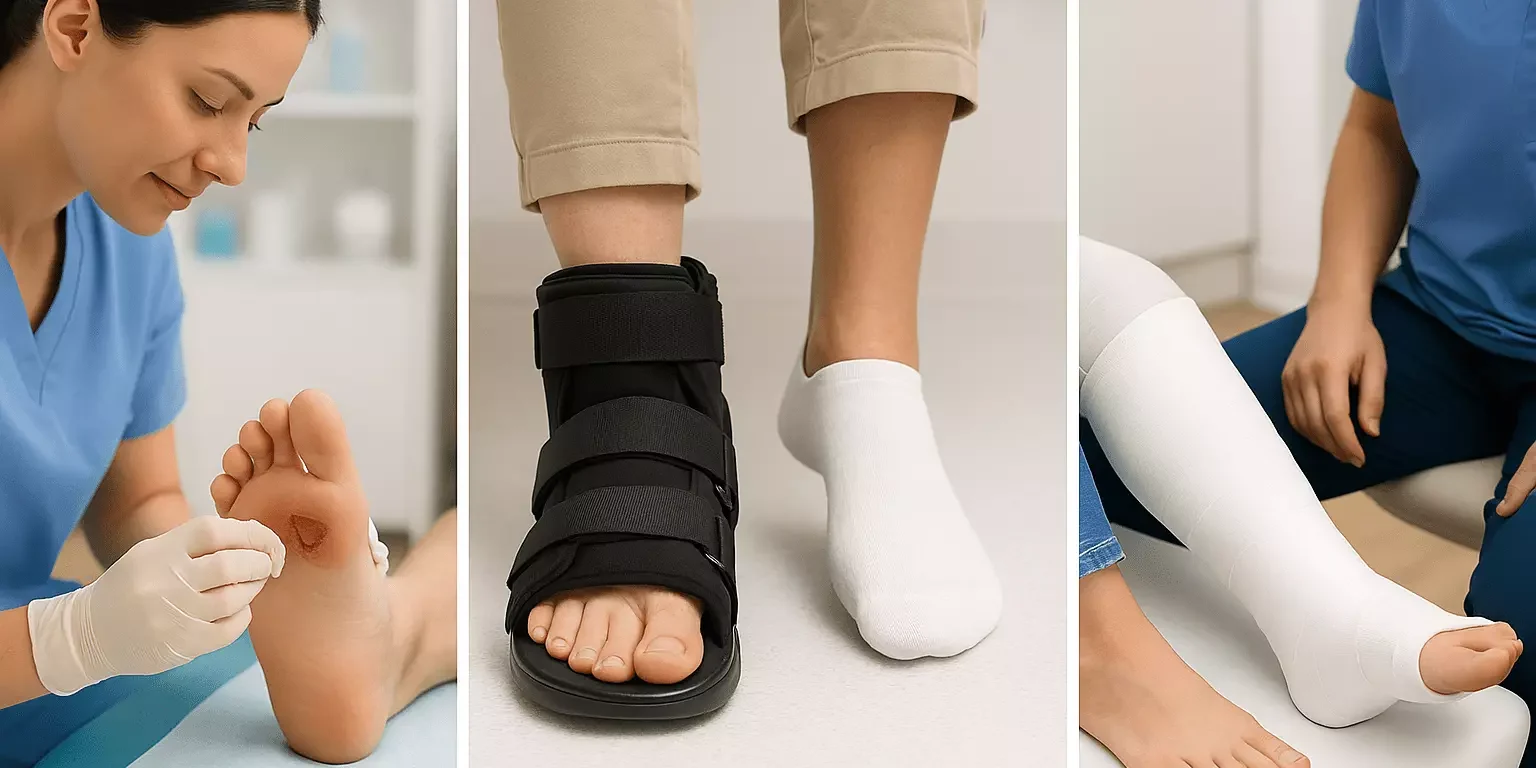
Diabetic wound care focuses on preventing, cleaning, and monitoring foot injuries, and it supports day-to-day foot health. Since diabetes may reduce blood flow and nerve function, minor skin damage may worsen without early care. Here is more information on the role of this form of wound care:
Inspecting Daily
Check your feet at the same time each day, and use a mirror for hard-to-see areas. Look at the soles, heels, toes, and nail edges when you need diabetic wound care. Since numbness may hide pain, visual checks help you catch changes early, before they develop into more complex issues.
Watch for:
- Redness
- Swelling
- Cracks
- Blisters
- Drainage
Skin color changes require attention, and drainage often signals a problem; dry skin also needs notice. If you find a sore that does not improve after a day or two, contact a medical provider. A daily check takes only minutes, but it gives you a clear record of changes. Write down what you see, and when you track new redness, odor, or swelling, you give your care team useful details.
Relieving Pressure
Pressure slows healing, and repeated rubbing may reopen the skin. Wear shoes that fit well. Since tight seams and narrow toe boxes irritate sore areas, footwear choice affects wound care.
A clinician may suggest padding, inserts, or a medical boot, and each option reduces stress on the wound. Rest also helps. When you keep weight off the injured spot, the skin gets a better chance to heal.
Managing Wounds
Clean the area with mild soap and water, and pat the skin dry with a clean towel. Skip harsh products. Since strong antiseptics may damage tissue, simple cleaning methods typically work better for routine care.
After cleaning, cover the wound with a fresh dressing, and keep the area free of dirt. Change bandages as directed. If the wound becomes larger, deeper, or wetter, a clinician needs to examine it.
Do not trim calluses or dead skin at home, and do not open blisters. These actions raise the risk of infection. When a wound sits near thick skin or pressure points, trained treatment helps limit added damage.
Useful wound care steps include:
- Wash gently
- Dry fully
- Apply a clean dressing
- Check for drainage
Improving Quality of Life
Foot wounds disrupt walking, and they often change work and home routines. Pain also affects sleep. Because limited movement reduces daily activity, untreated wounds often lead to wider health problems.
Regular wound care supports mobility, and it helps people manage daily tasks with less interruption. You may need changes in shoes or activity. If treatment starts early, many foot problems stay smaller and easier to manage.
Clear follow-up plans reduce confusion, and they help patients respond to changes faster. Missed warning signs create delays. When you know what to watch for, you take more direct action at home.
Schedule Diabetic Wound Care
Diabetic wound care addresses skin injuries before they become larger problems, and it supports safer foot management. Early action can make the difference between a minor and a major problem. If you notice redness, drainage, swelling, or a new sore, schedule diabetic wound care with a qualified provider today.