
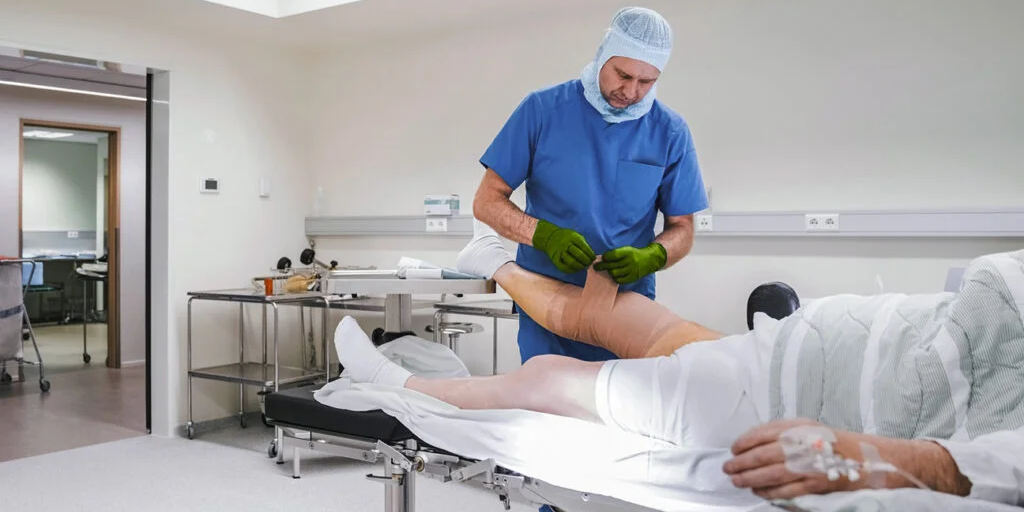
Knee pain can slowly change the way a person lives. Simple activities like walking, climbing stairs, standing for long periods, or even sleeping can become difficult. For many people, knee pain starts as a small problem and grows worse over time. When treatments no longer help and daily life becomes painful, doctors may recommend knee replacement surgery.
But when is knee replacement surgery needed? This is a common question, and the answer depends on several physical, medical, and lifestyle factors. In this article, we will explain everything in a simple, human way so you can understand the signs, reasons, and timing for knee replacement surgery.
What Is Knee Replacement Surgery?
Knee replacement surgery, also called knee arthroplasty, is a medical procedure where a damaged knee joint is replaced with an artificial joint. The new joint is made from metal, plastic, or ceramic materials that work like a healthy knee.
The goal of knee replacement surgery is to:
- Reduce pain
- Improve movement
- Help people return to daily activities
- Improve overall quality of life
This surgery is usually considered when knee damage becomes severe and other treatments no longer provide relief.
Common Reasons for Knee Damage
Before understanding when knee replacement surgery is needed, it’s important to know what causes knee damage.
1. Osteoarthritis
Osteoarthritis is the most common reason for knee replacement surgery. It happens when the protective cartilage in the knee wears away over time. Without cartilage, bones rub against each other, causing pain, stiffness, and swelling.
2. Rheumatoid Arthritis
This is an autoimmune disease where the body attacks its own joints. It can cause severe inflammation and damage to the knee joint.
3. Post-Traumatic Arthritis
This type of arthritis develops after a knee injury such as a fracture, ligament tear, or serious accident. Even after healing, the joint may slowly break down.
4. Knee Injuries or Deformities
Repeated injuries, poor knee alignment, or birth defects can cause uneven pressure on the knee, leading to long-term damage.
Signs That Knee Replacement Surgery May Be Needed
Not everyone with knee pain needs surgery. However, there are clear signs that suggest knee replacement may be the right option.
1. Severe Knee Pain That Doesn’t Go Away
If knee pain lasts for months or years and does not improve with rest, medication, or therapy, surgery may be needed. Pain that affects walking, standing, or sitting is a strong warning sign.
2. Pain That Affects Daily Life
When knee pain makes it hard to do normal activities like cooking, shopping, bathing, or working, it may be time to consider surgery.
3. Limited Movement and Stiffness
If your knee feels stiff and you cannot bend or straighten it fully, even after exercise or physical therapy, joint damage may be advanced.
4. Swelling That Does Not Improve
Constant swelling that does not respond to medication, ice, or rest may indicate serious joint damage.
5. Knee Deformity
If your knee appears bent inward or outward or looks uneven, it may be a sign that the joint has worn down too much.
When Other Treatments Stop Working
Doctors do not recommend knee replacement surgery as the first option. Most patients try other treatments before surgery is considered.
Non-Surgical Treatments Include:
- Pain medications
- Anti-inflammatory drugs
- Physical therapy
- Weight loss
- Knee braces
- Cortisone or lubrication injections
When knee replacement surgery is needed is usually when these treatments no longer help and pain continues to worsen.
Age and Knee Replacement Surgery
Many people believe knee replacement is only for older adults. While most patients are over 50, age alone is not the deciding factor.
- Younger patients may need surgery if pain is severe
- Older patients may avoid surgery if pain is manageable
Doctors focus more on pain level, joint damage, and quality of life than age.
How Doctors Decide If Surgery Is Needed
Doctors use several methods to decide if knee replacement surgery is the right choice.
Medical Evaluation Includes:
- Physical examination
- X-rays or MRI scans
- Pain history
- Movement testing
- Response to past treatments
If imaging shows severe joint damage and symptoms match, surgery may be recommended.
Types of Knee Replacement Surgery
Depending on the level of damage, doctors may recommend different types of surgery.
Total Knee Replacement
The entire knee joint is replaced. This is the most common type and is used when damage affects most of the knee.
Partial Knee Replacement
Only the damaged part of the knee is replaced. This option is for patients with damage limited to one area.
Your doctor will recommend the best option based on your condition.
Benefits of Knee Replacement Surgery
Understanding the benefits can help you decide when knee replacement surgery is needed.
Common Benefits:
- Long-term pain relief
- Improved mobility
- Better sleep
- Increased independence
- Ability to return to hobbies and activities
Most patients report a significant improvement in quality of life after recovery.
Risks and Considerations
Like all surgeries, knee replacement has risks, such as:
- Infection
- Blood clots
- Nerve damage
- Joint stiffness
However, modern techniques and proper care have made knee replacement very safe and successful for most patients.
Life After Knee Replacement Surgery
Recovery takes time and patience. Physical therapy plays a major role in success.
Recovery Timeline:
- Walking with support within days
- Improved movement in weeks
- Full recovery in 3–6 months
Most artificial knees last 15–20 years or longer with proper care.
When Should You Talk to a Doctor?
You should talk to a doctor if:
- Knee pain is constant
- You avoid activities because of pain
- Medications no longer work
- Your knee limits your independence
Early consultation helps you plan the best treatment path.
Final Thoughts
So, when is knee replacement surgery needed? It is needed when knee pain becomes severe, long-lasting, and life-limiting, and when other treatments no longer help. The decision is personal and should be made with a trusted medical professional.
Knee replacement surgery is not about age—it is about restoring comfort, movement, and joy in everyday life. If knee pain controls your life, it may be time to explore surgical options.
Frequently Asked Questions (FAQs)
1. How do I know if my knee pain is serious enough for surgery?
If pain lasts for months, affects daily activities, and does not improve with treatment, surgery may be considered.
2. Can I avoid knee replacement surgery?
Some people manage pain with exercise, weight loss, and medication, but surgery may be needed if damage becomes severe.
3. Is knee replacement surgery painful?
Pain is controlled with medication, and most patients say pain improves greatly after recovery.
4. How long does a knee replacement last?
Most knee replacements last 15 to 20 years or longer with proper care.
5. Can I walk normally after knee replacement?
Yes, most patients walk better and more comfortably after completing recovery and physical therapy.





