Bunion pain can make walking, exercise, and daily movement uncomfortable, especially when pressure builds around the joint. The condition may worsen with tight footwear, prolonged standing, high-impact activity, or poor foot support. Here is a closer look at how to manage bunion pain while staying active:
Choosing Supportive Footwear
Footwear is one of the fundamental factors in managing bunion pain during physical activity. Shoes that are too narrow or too tight press against the bunion, which increases friction and soreness. Look for shoes with a wide toe box, so the bunion has room and is not compressed. A firm and supportive sole also helps distribute body weight more evenly across the foot, and this reduces the pressure placed on the affected joint. Avoid pointed or tapered-toe styles, as these push the toes together and can worsen bunion discomfort. Replacing worn-out shoes is also a helpful step, as old footwear loses structural support over time; it is worth checking the soles regularly to gauge wear.
Modifying Daily Activities
Small changes to how you move and exercise can make a meaningful difference in managing bunion pain. Here are some helpful modifications:
- Switch to low-impact exercise: Activities like swimming, cycling, and walking on flat surfaces reduce the repetitive stress on the bunion joint.
- Shorten your workout duration: Doing shorter sessions more frequently throughout the week lets you stay active while giving the foot adequate recovery time.
- Adjust your walking pattern: Avoid pushing off the ground with the big toe when it causes pain.
- Take rest breaks: Scheduling short rest periods during prolonged standing or walking may prevent joint inflammation.
- Stretch your feet daily: Gentle toe stretches and range-of-motion exercises may maintain flexibility around the joint and reduce stiffness before and after activity.
Making these adjustments means creating a sustainable routine that works with your foot’s current condition.
Using Pain Relief and Supports
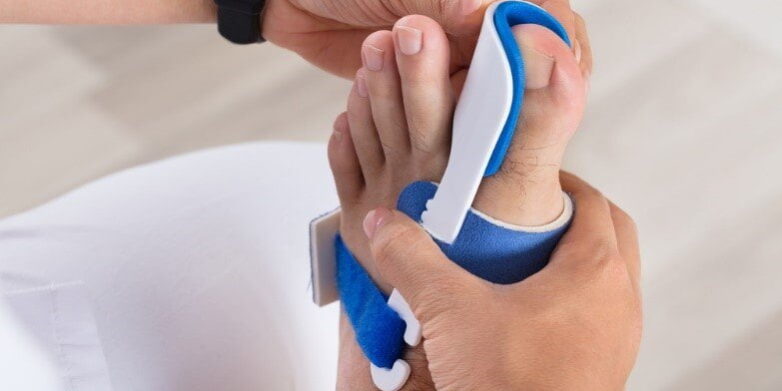
Several non-prescription tools can reduce bunion discomfort during and after activity. Bunion pads and cushions are a helpful starting point, as they create a protective barrier between the bony bump and your shoe. Toe spacers are another option; they fit between the big toe and the second toe to maintain alignment and reduce friction during movement. Custom or over-the-counter orthotics can also be placed inside shoes to provide more arch support and redistribute pressure away from the bunion. Anti-inflammatory creams or over-the-counter oral pain relievers may offer short-term relief.
Seeking Professional Care
Some symptoms related to a bunion extend beyond typical discomfort and may signal that professional evaluation is appropriate. Here are key signs that indicate the need to visit a healthcare provider:
- Persistent pain that limits activity: If bunion pain consistently prevents you from exercising or completing daily tasks, a provider can assess your options.
- Visible swelling or redness that does not subside: Ongoing inflammation around the joint may need professional attention to rule out other conditions.
- Numbness or tingling in the toe: These sensations often indicate nerve involvement and should be evaluated promptly.
- Pain that worsens over time: A gradual increase in discomfort despite supportive footwear and padding may indicate that conservative measures alone are insufficient.
Tracking your symptoms and sharing that information with a healthcare provider gives them a clearer picture of what you are experiencing.
Learn More About Bunion Treatments
Managing bunion pain while staying active is achievable with the right approach. Supportive footwear, activity modifications, and pain relief tools each play a key role in keeping discomfort at a manageable level. Knowing when to seek professional care is equally fundamental, as some cases benefit from targeted treatment beyond at-home strategies. Contact a qualified podiatrist near you to book your appointment and learn more about bunion treatments today.