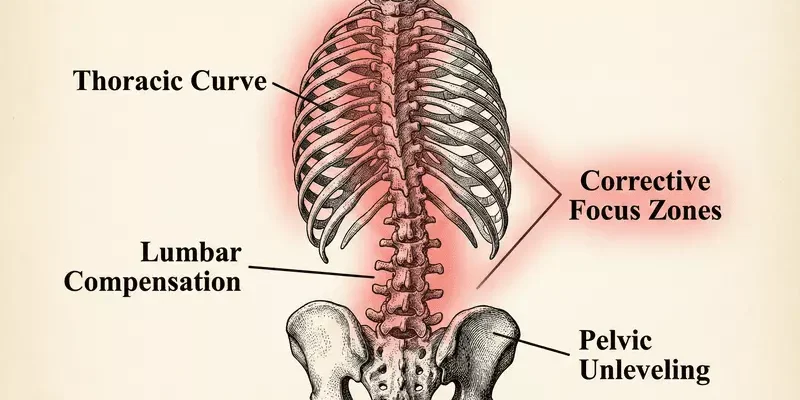
The spine plays a role in supporting the body, protecting the spinal cord, and allowing a wide range of movement. When viewed from behind, a healthy spine usually appears straight. The spine develops a sideways curve in some people, and this condition is known as scoliosis. It may affect children, teenagers, and adults, and the degree of curvature varies from one person to the next. Learning about how scoliosis is identified and what care options a scoliosis specialist can offer helps you make informed decisions.
What Is Scoliosis?
Scoliosis is a condition in which the spine curves to the side, and it can form a shape similar to the letter “C” or “S.” Instead of running in a straight vertical line, the affected portion of the spine bends left or right. The curve can appear in the upper back, the lower back, or across both regions.
There are several types of scoliosis. The most common form is idiopathic scoliosis; this means the exact cause is not known. Other forms include congenital scoliosis, which is present at birth due to how the spine formed, and neuromuscular scoliosis, which is linked to conditions that affect the muscles and nerves. Adults may also develop scoliosis as the spine changes with age.
Signs of scoliosis can differ depending on the severity of the curve. Common observations vary, including uneven shoulders, one side of the hips sitting higher than the other, a shoulder blade that appears more prominent, or a tilt in the waistline. The curve develops gradually in many cases, and it may not cause discomfort in its early stages.
How Is It Diagnosed and Treated?
A diagnosis usually begins with a physical examination. A common method is the forward bend test; this is when a person bends forward while the examiner looks for asymmetry in the back and ribs. If a curve is suspected, imaging tests such as X-rays help measure the angle of the curve and confirm its location. Treatment depends on several factors, including the size of the curve, the age of the person, and whether the spine is still growing. Common approaches include:
- Observation and Monitoring: For smaller curves, a specialist may recommend regular checkups to track whether the curve changes over time.
- Bracing: For moderate curves in growing individuals, a back brace can be recommended to help limit further progression.
- Surgery: For larger curves that continue to progress, surgery may be discussed.
Each plan is tailored to the individual, and a scoliosis specialist will review the options that best match a person’s situation.
What Are the Benefits?
Seeking care for scoliosis offers several practical advantages. Early evaluation allows a specialist to track the curve, and they can respond before it advances further. When a curve is monitored over time, changes may be identified and addressed within a suitable timeframe.
A structured care plan can also support daily comfort and mobility. People may find that working with a specialist gives them an understanding of their condition and the choices available to them. This clarity can reduce uncertainty, and it helps individuals and families plan ahead. For growing children and teenagers, timely attention supports healthy development during years when the spine changes most.
Meet With a Scoliosis Specialist
Scoliosis affects each person differently, and this is why individualized guidance carries value. An orthopedic specialist can examine the spine, explain what the measurements indicate, and outline a care plan suited to your needs. If you or a family member notices signs of a curved spine, an evaluation is a constructive next step.